
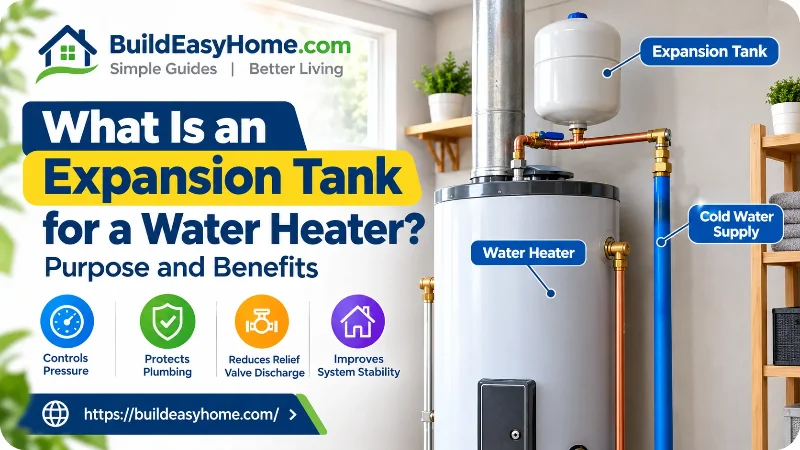
A residential water heater supplies hot water for showers, laundry, dishwashing, and everyday household tasks. It also needs a way to manage pressure changes as water heats and expands. Homeowners often ask what is an expansion tank for a water heater when they notice a small tank connected to their plumbing system.
A water heater expansion tank helps manage the extra water volume that develops inside a closed plumbing system during heating. It provides temporary space for expanding water and helps control pressure increases. Understanding its purpose can help homeowners recognize plumbing problems, maintain their water heating systems, and make informed repair decisions.
What Is a Water Heater Expansion Tank?
A water heater expansion tank is a small, pressure-rated vessel that connects to the cold-water supply piping near a storage water heater. Most residential models contain a metal shell and an internal rubber diaphragm or bladder. The diaphragm separates the water chamber from a pressurized air chamber. When water expands during heating, some of it enters the expansion tank and compresses the air. This process helps absorb pressure changes within the plumbing system. An expansion tank does not heat water or supply hot water directly to faucets. It supports the plumbing system by accommodating thermal expansion.
Homeowners can recognize an expansion tank by several common features:
- Compact design: Most residential models look like small metal cylinders or rounded vessels
- Internal diaphragm: A rubber membrane separates water from the air chamber
- Cold-water connection: The tank typically connects to the cold-water supply near the water heater
- Pressure rating: The manufacturer’s label identifies the tank’s operating specifications
How Does a Water Heater Expansion Tank Work?
Water expands as its temperature rises. A storage water heater warms incoming cold water, which increases the water’s volume. The plumbing system must accommodate that additional volume during each heating cycle. An open plumbing system may allow expanded water to move back toward the supply. A closed system prevents reverse flow when a check valve, pressure-reducing valve, or backflow preventer blocks that movement. The expansion tank gives the extra water volume somewhere to go. Its internal air chamber compresses as water enters the tank, helping limit pressure increases.
How the Internal Diaphragm Controls Pressure
The rubber diaphragm separates water from the air cushion inside the tank. Water pressure pushes the diaphragm into the air chamber as the tank receives expanding water. The compressed air absorbs part of the pressure change.
The process supports normal plumbing operation through repeated heating cycles. These features explain why a properly selected expansion tank can benefit a closed water supply system:
- Pressure management: The tank accommodates extra water volume during heating
- Plumbing protection: It helps reduce repeated pressure stress on pipes and fittings
- Relief valve support: It can help reduce unnecessary discharge caused by thermal expansion
- System stability: It helps manage pressure changes during normal water heater operation
GE Appliances explains that thermal expansion can contribute to pressure relief valve discharge in closed plumbing systems. Homeowners should investigate recurring leaks rather than assume the expansion tank always causes the problem.
Why Is an Expansion Tank Important?
An expansion tank helps control pressure changes when heated water cannot move backward through the incoming supply line. Without suitable thermal expansion control, repeated pressure increases can place stress on plumbing components. A properly selected and installed tank can help protect pipes, fittings, fixtures, and appliances connected to the plumbing system. It can also reduce unnecessary pressure relief valve discharge when thermal expansion causes the problem.
Protection for the Temperature-and-Pressure Relief Valve
Most storage water heaters include a temperature-and-pressure relief valve. This safety device releases water when the temperature or pressure reaches its specified limit. The valve serves an essential safety purpose. Homeowners should never block, cap, or disable it to stop a leak.
Several symptoms may indicate a pressure or expansion problem:
- Repeated dripping: The relief valve releases water during heating cycles
- Pressure fluctuations: Household plumbing experiences unusual pressure changes
- Visible leaks: Moisture appears around the expansion tank or its fittings
- Corrosion: Rust or deterioration develops around tank connections
These symptoms can have several causes, including excessive supply pressure, a faulty relief valve, or a damaged expansion tank. A qualified plumber can inspect the system and identify the actual fault.
Where Is an Expansion Tank Installed?
Installers typically connect an expansion tank to the cold-water supply piping near the water heater. The correct connection point depends on the plumbing layout, the location of pressure-control devices, and the applicable plumbing code. Section 607.3 of the 2021 International Plumbing Code addresses thermal expansion control and its relationship to check valves, pressure-reducing valves, and backflow preventers. Local authorities may enforce a different code edition or additional requirements.
A professional installer considers several factors when choosing the location:
- Connection point: The tank must connect to the portion of the system that requires thermal expansion control
- Structural support: A suitable bracket or support must carry the tank’s weight
- Manufacturer instructions: The installation must follow the tank manufacturer’s requirements
- Service access: The installer should leave enough room for inspection and maintenance
Incorrect installation can reduce the tank’s effectiveness or place unnecessary stress on plumbing connections. Homeowners should ask a qualified plumber to confirm the correct location for their system.
Does Every Water Heater Need an Expansion Tank?
Not every home requires a separate expansion tank. The need depends on the plumbing system, local codes, equipment instructions, and the thermal expansion control method already in place. Closed plumbing systems commonly need an approved way to accommodate expanding water. A check valve or backflow preventer can stop water from returning through the supply line. A pressure-reducing valve can also create a closed system in certain installations. Bradford White recommends controlling thermal expansion through an expansion tank or another suitable method. Homeowners should confirm their system’s requirements instead of purchasing a tank based on appearance alone.
Expansion Tank Sizing and Maintenance
The correct expansion tank size depends on the water heater’s capacity, incoming water pressure, operating temperature, and the manufacturer’s sizing specifications. A tank that lacks sufficient capacity may not control pressure changes effectively. The installer should also check the tank’s air precharge against the system’s static water pressure and the manufacturer’s instructions. Accurate measurements help the tank work as intended.
Homeowners can support reliable operation through regular visual checks:
- Inspect for leaks: Look for moisture around the tank and its fittings
- Check for corrosion: Watch for rust, deterioration, or damaged connections
- Review unusual symptoms: Arrange an inspection if the relief valve repeatedly discharges water
- Follow maintenance guidance: Use the manufacturer’s inspection and replacement recommendations
Homeowners should not open a pressurized tank or attempt repairs without suitable training. A qualified plumber can evaluate the tank’s air charge, diaphragm condition, system pressure, and installation.
Final Thoughts
A water heater expansion tank helps manage pressure changes that occur when water expands during heating. It can reduce unnecessary stress on plumbing components and help control thermal expansion in closed systems. Homeowners should check local plumbing requirements, follow manufacturer guidance, and address recurring pressure problems promptly. A qualified plumber can determine whether a system needs an expansion tank and ensure proper sizing, installation, and maintenance.
Frequently Asked Questions
Q1. what is an expansion tank for a water heater?
An expansion tank accommodates the extra water volume that develops when water heats inside a closed plumbing system. It helps control pressure changes and protects connected plumbing components from repeated stress.
Q2. Does every water heater need an expansion tank?
No. Requirements depend on the plumbing system, applicable codes, and manufacturer instructions. Some systems use another approved method of controlling thermal expansion.
Q3. Can a faulty expansion tank cause a water heater to leak?
A faulty expansion tank can contribute to pressure problems and relief valve discharge. Other faults can cause similar symptoms, so a plumber should inspect the system.
Q4. Where should an expansion tank be installed?
Installers typically connect the tank to the cold-water supply piping near the water heater. The correct position depends on the plumbing layout, local codes, and manufacturer instructions.
Q5. How long does a water heater expansion tank last?
Service life varies with tank quality, water pressure, installation, and operating conditions. Regular inspections can help identify damage before the tank stops functioning properly.