The last tomato comes off the vine, the nights start biting, and most gardeners do the same thing: pull the dead plants, shrug, and walk away until spring. It’s an understandable instinct, but it costs you. Soil left bare through winter loses nutrients to rain, compacts under snow, and hands next year’s weeds an open invitation. Winterizing a raised bed takes an afternoon in late fall and pays you back with warmer, looser, richer soil the moment you’re ready to plant again. Here’s exactly how to do it.
When to Winterize a Raised Bed
Start after your first hard frost but before the ground freezes solid. In USDA zones 3–5, that usually means late September through October. Zones 6–7 have until roughly mid-November. In zones 8–10, where frost is light or absent, you’re less protecting against cold than resetting the soil — do it whenever your summer crops finish.
The rule of thumb: if you can still push a trowel into the soil easily, you have time.
Step 1: Clear Out Spent Plants
Pull annuals by the root and remove them completely. Chop healthy stems and leaves into a few pieces and add them to your compost pile, where they’ll break down over winter.
Do not compost anything showing blight, powdery mildew, rust, or insect eggs. Bag that material and dispose of it. Diseased debris left in or near the bed overwinters the pathogen and reinfects next season’s crop — this is the single most common reason gardeners see the same problem year after year.
Leave the root systems of legumes like peas and beans in place. Their nitrogen-fixing nodules feed the soil as they decompose.
Step 2: Feed the Soil Before It Sleeps
Raised beds drain fast, which is a virtue in July and a liability in the off-season, because that same drainage flushes nutrients out. Fall is the best time to replenish, since amendments have four to five months to break down and integrate.
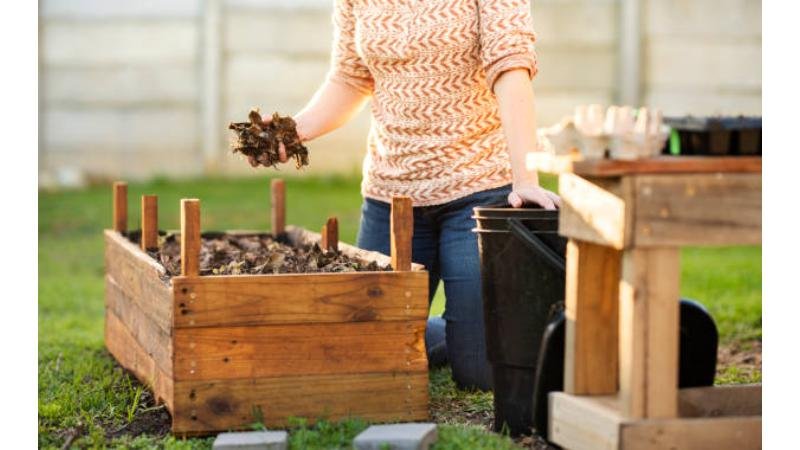
Add 2–3 inches of finished compost or well-aged manure across the surface. Then stop. Don’t till it in. Tilling destroys fungal networks and earthworm channels that took a full season to build. Winter freeze-thaw cycles and soil biology will pull the organic matter down for you.
If a soil test shows you need it, fall is also the right window for slow-release amendments like bone meal, greensand, or rock phosphate, which need months to become plant-available.
Step 3: Mulch Heavily
Bare soil is the enemy. Cover the entire bed with 4–6 inches of insulating mulch:
- Shredded leaves— free, ideal, and they break down into leaf mold by spring
- Straw— not hay, which carries weed seed
- Wood chips— best for perennial beds and pathways
- Pine needles— good for blueberries and other acid-lovers
Mulch moderates soil temperature, prevents erosion from winter rain, suppresses early spring weeds, and shelters the beneficial insects and microbes that make your soil work.
Step 4: Consider a Cover Crop
If you want to go a step further, sow a cover crop instead of — or under — your mulch. Winter rye, crimson clover, hairy vetch, and Austrian winter peas all establish quickly in cool soil. They hold nutrients in living tissue rather than letting rain carry them off, and their roots break up compaction.
Cut them down two to three weeks before spring planting and leave the residue on the surface as mulch.
Step 5: Protect the Frame Itself
The soil isn’t the only thing that needs attention. Freeze-thaw cycles are hard on bed construction, so inspect the structure before winter sets in.
- Cedar and redwood:check for split boards and loose corner brackets; tighten hardware
- Untreated pine:expect the shortest lifespan; consider a food-safe sealant on exterior surfaces
- Metal (galvanized or Corten):check for rust at soil contact points and touch up as needed
- Composite:clean off soil residue, which traps moisture against the material
A durable raised garden bed built from rot-resistant material will handle a dozen winters with minimal maintenance, but even the best frame benefits from a five-minute inspection each fall.
Step 6: Handle Irrigation and Covers
Disconnect, drain, and store drip lines and soaker hoses. Water trapped in emitters expands when it freezes and cracks the tubing.
If you’re overwintering hardy crops — garlic, kale, spinach, carrots — install low tunnels or cold frames now, while the ground is still workable and stakes push in easily.
Frequently Asked Questions
Should I remove the soil from my raised bed for winter? No. Soil left in place retains its biology and structure. Removing it destroys both.
Do I need to cover my raised bed with plastic? Rarely. Plastic traps moisture and kills soil life. Organic mulch is better in nearly every case.
Can I plant anything in a winterized bed? Yes — plant garlic and shallots in fall and harvest them the following summer.
Winterizing takes one afternoon. Come spring, you’ll pull back the mulch to find dark, crumbly, ready-to-plant soil — while your neighbors are still breaking up a compacted crust with a garden fork.