
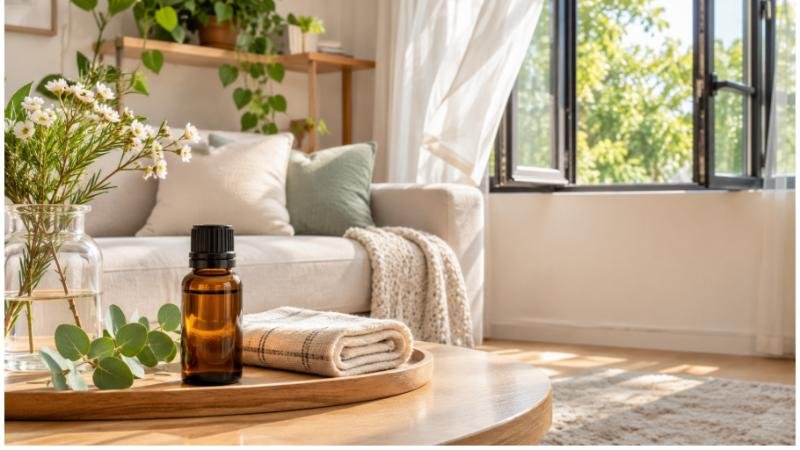
A home doesn’t need to smell like perfume to feel fresh. Often, the most welcoming rooms are simply clean, well-ventilated and free from lingering cooking smells, damp towels or musty fabrics.
Yet when an unpleasant smell appears, it’s tempting to reach for a room spray or switch on a fragrance diffuser. The result can be a mixture of strong perfume and the original odour, rather than a genuinely fresher space. A better approach is to tackle the source first, improve airflow where appropriate and use fragrance only when it adds something pleasant.
Here is a practical room-by-room method for keeping your home fresh without filling every corner with scent.
1. Find the Source Before You Add Fragrance
The first step is working out where an unpleasant smell is coming from.
Walk through your home without spraying anything and note where the odour is strongest. Is it concentrated around the kitchen bin, noticeable near a bathroom drain, or coming from a sofa that your dog regularly uses?
Pay attention to when it appears, too. A smell that develops after cooking suggests a different problem from one that is strongest after a shower or on a damp morning.
Start with this simple check:
| Where You Notice It | Possible Source | First Action |
| Kitchen | Food waste, bin residue, cooking grease | Empty and clean the bin; check food and cooking surfaces |
| Bathroom | Damp towels, moisture, drains | Dry textiles, check drainage and ventilation |
| Living room | Upholstery, rugs, pet bedding | Clean washable fabrics and inspect soft furnishings |
| Bedroom | Bedding, laundry, poor airflow | Wash bedding, remove damp laundry and check ventilation |
| Utility area | Damp laundry or washing machine residue | Inspect the machine and dry fabrics promptly |
These are starting points, not definitive diagnoses.
If a persistent musty smell is accompanied by water staining or visible mould, investigate the moisture problem rather than covering it with air freshener. Hidden leaks or extensive mould may require professional help.
The US Environmental Protection Agency identifies source control as a central approach to improving indoor air quality, alongside ventilation and appropriate filtration.
Try this: Choose the room where the odour is strongest, remove or clean the most likely source, then reassess the smell before using any scented product.
If you notice a rotten-egg gas smell or suspect a fuel-gas leak, leave the area and follow your gas supplier’s emergency guidance rather than continuing a household odour investigation.
2. Use Cleaning and Ventilation as Your Foundation
Once you’ve found the likely cause, focus on removing it.
In the kitchen, empty food waste regularly, clean the bin itself and use an extractor that vents outdoors when available. A scented candle will not remove grease residue or spoiled food.
In the bathroom, hang towels so they dry completely, wipe persistent moisture and check that the extractor fan works properly. If you use a shower curtain, allow it to dry instead of leaving it folded against a wet surface.
Soft furnishings deserve attention as well. Upholstery, rugs, cushion covers and pet bedding can retain odours long after the original source has disappeared.
Follow their cleaning instructions rather than covering them repeatedly with fabric spray.
Ventilation is the next consideration. When outdoor air conditions are suitable, opening windows can help dilute indoor pollutants and remove stale air. Kitchen and bathroom extractors that discharge outdoors are particularly useful near moisture and odour sources.
For homes with recurring dampness, consider measuring humidity with an inexpensive hygrometer. The EPA recommends keeping indoor relative humidity generally between 30% and 50% to help control moisture-related problems.
Air purifiers may provide supplementary filtration, but their ability to address gases and odours depends on the technology and filter design. They are not substitutes for fixing leaks, cleaning contaminated surfaces or providing adequate ventilation.
Practical rule: Clean the source, allow damp materials to dry, improve suitable ventilation, and only then decide whether the room needs fragrance.
3. Give Each Room a Different Freshness Strategy
One of the easiest ways to overdo home fragrance is to use the same scented product everywhere.
A kitchen, bedroom and entrance hall have different requirements. Their freshness routines should reflect how the spaces are actually used.
Kitchen: Keep the Air Neutral
Cooking produces strong but often temporary smells. The priority should be extraction, cleaning and food-waste management.
Run appropriate cooking ventilation, clean grease-prone areas and check the bin before reaching for fragrance.
Avoid using heavy perfume to cover cooking smells, particularly while food is being prepared.
Bathroom: Prioritise Dryness
A fresh bathroom is often the result of effective moisture control.
Dry towels properly, clean damp surfaces and address any leaks or drainage problems.
If you choose to use a fragrance product, place it where it cannot easily spill or be knocked over. Never use scent to disguise a persistent damp or sewage smell.
Living Room: Check Fabrics First
Sofas, cushions, rugs and pet bedding can hold onto odours.
Washing removable covers and cleaning suitable textiles may make a bigger difference than adding a diffuser.
If fragrance is appropriate for the household, one modestly used scent source may be enough. There’s rarely a need to combine sprays, candles and diffusers in the same room.
Bedroom: Keep It Gentle
Bedrooms benefit from clean bedding, dry laundry and appropriate airflow.
For people who are sensitive to fragrance, a fragrance-free room may be the most comfortable option.
A stronger scent doesn’t necessarily create a better sleeping environment.
Entrance Hall: Stop Odours at the Door
Shoes, damp coats and sports bags can introduce odours into an otherwise clean home.
Allow footwear to dry, wash reusable mats when needed and provide a suitable place for wet items.
Removing the source is usually more effective than greeting visitors with a strong room spray.
4. Add Fragrance Carefully, Not Automatically
Once a room is clean and the underlying problem has been addressed, fragrance can be an optional finishing touch.
The aim is to create a pleasant environment, not a scent that follows someone through every doorway.
Before introducing a product, consider three questions.
Who uses the room? Fragrance preferences differ, and some people experience irritation or discomfort around scented products. A fragrance-free option should remain acceptable.
How will the scent be released? Candles, sprays, passive diffusers and electronic diffusers behave differently and have different handling requirements. Follow the manufacturer’s directions.
Can it be used safely? Keep scented oils away from children and pets, prevent spills and avoid placing fragrance devices in unstable locations.
Essential oils deserve particular care in homes with animals. Veterinary guidance warns that concentrated oils can be hazardous through ingestion, skin exposure and, in some circumstances, inhalation. Bird owners should be especially cautious about diffusers.
Where pets or household members have respiratory sensitivities, avoiding airborne fragrance may be the better choice.
There is no universal number of drops or minutes that guarantees a safe fragrance level for every home.
A useful household test is to try one fragrance source, follow its instructions and assess whether anyone finds the scent uncomfortable. More products are not necessarily an improvement.
5. Choose Fragrance Containers for Their Actual Use
The appearance of a fragrance bottle can complement a carefully designed room, but containers should be selected for what they hold and how they will be used.
A concentrated fragrance oil, a roll-on personal fragrance and a room spray may need different dispensing systems.
For example, a dropper-style container can help dispense suitable liquids in controlled amounts, while a spray bottle is intended for a different type of application. A roll-on bottle, by contrast, is generally associated with direct personal application rather than scenting an entire room.
This is why packaging suppliers distinguish between container formats rather than treating every fragrance bottle as interchangeable.
For example, FOLOVER PACK supplies glass packaging for essential oils, fragrance and personal-care products. Its essential oil glass bottle collection includes Euro dropper bottles, Boston Round bottles and roll-on formats, with selected caps, reducers and roller components.
For fragrance and personal-care brands developing products, these different formats provide options to evaluate according to the intended formulation, dispensing method and presentation.
The bottle and closure still need to be assessed together. An attractive glass finish does not prove that a container is compatible with a particular fragrance mixture or suitable for use with a diffuser.
For consumers, the simplest principle is to keep purchased fragrance products in their original labelled packaging unless the manufacturer specifically permits another container.
When storing scented oils, ensure closures are secure, labels remain readable, and bottles are kept away from heat, breakage risks and unintended access by children or pets.
A beautiful glass bottle can be part of the room’s design. It should not become a safety or handling problem.
6. Build a Weekly Fresh-Home Routine That Actually Works
Keeping a home fresh doesn’t require a complicated collection of products. Consistent attention to moisture, waste, textiles and ventilation is usually more useful.
Here is a simple routine to adapt to your household.
| When | What to Do | What It Prevents |
| Daily | Remove food waste as needed and clean spills promptly | Lingering kitchen odours |
| After showers | Use suitable ventilation and hang towels to dry | Persistent moisture and mustiness |
| Several times a week | Check pet bedding, shoes and laundry areas | Odours building up in fabrics |
| Weekly | Wash relevant textiles and clean waste-bin surfaces | Recurring household smells |
| Monthly | Check drains, ventilation equipment and signs of leaks | Unnoticed maintenance problems |
Use this schedule as a starting point rather than a rigid rule. A busy family home with pets may need more frequent cleaning than a lightly occupied flat.
One particularly helpful habit is a short weekly walkthrough. Spend a few minutes checking the kitchen, bathrooms, laundry area and soft furnishings for new odours or dampness.
If a smell has returned, find out why before adding fragrance.
Conclusion: A Fresh Home Doesn’t Need a Signature Scent
Making a home smell fresh is less about finding the strongest fragrance and more about creating a comfortable, well-maintained environment.
Start with the source of unpleasant smells. Keep fabrics clean and dry, address moisture problems and use suitable ventilation. Then consider fragrance as an optional addition rather than the main solution.
Different rooms may need different approaches, and some households are better served by avoiding scented products altogether.
The result is a home that feels more welcoming because its everyday problems are being managed—not because every room has been covered with perfume.