
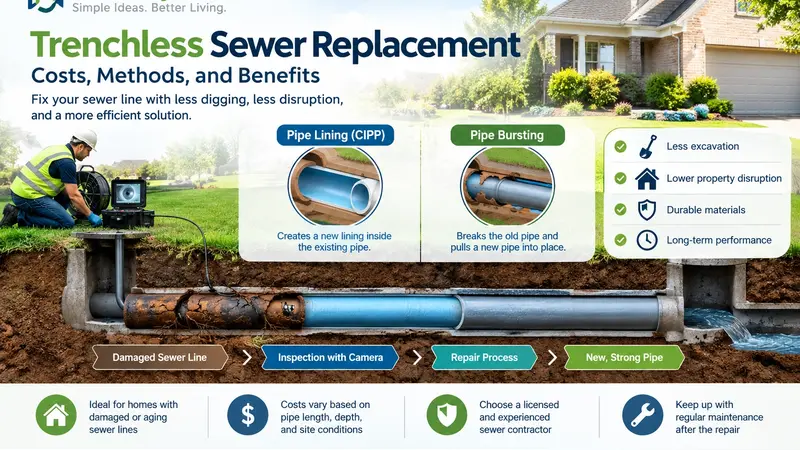
A damaged sewer line can cause recurring drain blockages, sewage odors, slow drainage, and wastewater backups. Traditional sewer repairs often require extensive digging, which can damage lawns, driveways, patios, and landscaping. Homeowners now have alternatives that can reduce excavation and limit disruption to their property. Trenchless sewer replacement uses specialized techniques to repair or replace underground sewer pipes without digging a continuous trench.
Contractors typically use pipe lining or pipe bursting, depending on the pipe’s condition and the property’s layout. The right method depends on the damage, pipe material, soil conditions, and access points. Understanding these factors helps homeowners compare repair options, evaluate estimates, and choose a solution that meets their property’s needs.
What Is Trenchless Sewer Replacement?
Trenchless sewer replacement describes methods that restore or replace underground sewer lines with limited excavation. Instead of exposing the entire pipe, contractors use existing access points or small excavation areas to complete the work. Two common methods serve different purposes. Cured-in-place pipe (CIPP) lining creates a new structural layer inside a suitable existing pipe. Pipe bursting breaks apart the old pipe while pulling a new pipe into position.
These methods can reduce surface damage and restoration work. A professional inspection helps determine whether the existing pipe can support lining or requires replacement. The National Association of Sewer Service Companies (NASSCO) identifies pipe condition and project requirements as important factors in selecting rehabilitation technology.
How Does the Process Work?
A contractor usually begins with a sewer camera inspection. A specialized camera travels through the pipe and helps identify cracks, root intrusion, separated joints, corrosion, and blockages.
The contractor reviews the inspection results and recommends a suitable repair method. Workers may clean the pipe, remove obstructions, and prepare access points before installing the lining or replacement pipe. After completing the work, the contractor checks the repaired section and verifies that wastewater can flow properly. Homeowners should request the inspection results, written warranty, and details about any remaining concerns.
Pipe Lining
Pipe lining involves inserting a resin-saturated liner into the existing sewer pipe. The contractor positions the liner and cures the resin using an appropriate method, such as heat or ultraviolet light. The hardened liner creates a new interior surface that can seal certain cracks and prevent root intrusion through repaired areas. This method works best when the existing pipe maintains a suitable shape and provides a clear path for installation.
Pipe Bursting
Pipe bursting replaces the existing pipe with a new one. A specialized bursting head moves through the old line, fractures or splits it, and pulls a replacement pipe into position. This method can suit pipes with extensive deterioration that makes lining unsuitable. Contractors must assess nearby utilities, soil conditions, pipe alignment, and access requirements before recommending it.
Signs Your Sewer Line Needs Repair
Sewer line damage can develop gradually. Recognizing recurring symptoms helps homeowners arrange an inspection before the problem causes more disruption.
Watch for these warning signs:
- Repeated drain blockages: Several fixtures clog regularly.
- Sewage odors: Persistent unpleasant smells appear indoors or outside.
- Frequent backups: Wastewater returns through toilets or floor drains.
- Wet patches: Unexplained damp areas develop in the yard.
- Slow drainage: Multiple sinks, showers, or toilets drain poorly.
These symptoms do not always indicate a damaged sewer pipe. Tree roots, local blockages, and other plumbing problems can produce similar signs. A professional diagnosis helps identify the actual cause.
Benefits and Limitations
The main advantage of trenchless sewer replacement is reduced excavation. Contractors can often complete the work without removing large sections of landscaping or paving. Homeowners may also benefit from less restoration work and a shorter disruption period. The actual savings and schedule depend on the repair method, site conditions, and project complexity.
Trenchless methods have limitations. A severely collapsed pipe, difficult alignment, or unsuitable access may require traditional excavation. Pipe lining can also reduce the pipe’s internal diameter, while pipe bursting requires enough space and suitable ground conditions for installation. No method guarantees a successful result in every situation. A qualified contractor should explain the benefits, limitations, and expected outcome before starting the work.
How Much Does Trenchless Sewer Replacement Cost?
The cost varies by location and project requirements. Pipe length, diameter, depth, damage, labor, access, and the selected technology all influence the final estimate. A straightforward lining project may involve less work than replacing a badly damaged pipe beneath a driveway. Additional excavation, difficult soil, utility conflicts, permits, and pipe connections can increase the total price.
Ask the contractor for a written estimate that explains the full scope of work. Confirm whether the price includes camera inspection, cleaning, materials, labor, permits, final testing, and surface restoration. Compare estimates from qualified contractors rather than choosing the lowest price alone. A detailed quote makes it easier to understand what each company will deliver and which additional charges may apply. If you
How to Choose the Right Contractor
The contractor’s experience and inspection process can affect the quality of the repair. Choose a professional who explains the problem clearly and recommends a method based on documented findings. Before signing a contract, confirm local licensing and insurance requirements. Ask about previous trenchless projects, installation procedures, warranty coverage, and expected completion time.
Request answers to these questions:
- What did the camera inspection reveal?
- Why does this repair method suit my pipe?
- Does the estimate include all expected costs?
- What warranty covers materials and workmanship?
A reliable contractor should explain potential complications without promising results that the inspection cannot support.
Final Thoughts
Trenchless sewer replacement can help homeowners address damaged underground pipes while limiting excavation and property disruption. Pipe lining and pipe bursting offer different solutions, and the right choice depends on the pipe’s condition and the property’s requirements. Start with a professional camera inspection, compare written estimates, and review warranty terms before approving the work. A well-planned repair can restore drainage and help homeowners make informed decisions about their sewer systems. If you more details details to visit my blogs.
Frequently Asked Questions
Q1. How long does trenchless sewer replacement take?
Some projects take a day, while more complex work can require several days. Pipe condition, preparation, curing, and access affect the schedule.
Q2. Is trenchless sewer repair suitable for every home?
No. Severe pipe collapse, difficult access, and unsuitable ground conditions can limit the available methods. An inspection determines which options are practical.
Q3. Does trenchless sewer replacement require digging?
Contractors usually need access points, and some projects require small excavation pits. The method generally avoids digging a continuous trench along the entire pipe.
Q4. How long can a trenchless sewer repair last?
Service life depends on the materials, installation quality, soil conditions, and maintenance. Ask your contractor for product specifications and written warranty details.
Q5. Is trenchless repair cheaper than traditional replacement?
It can reduce excavation and restoration costs, but it is not always cheaper. Compare the total project estimates and the work included in each proposal.