
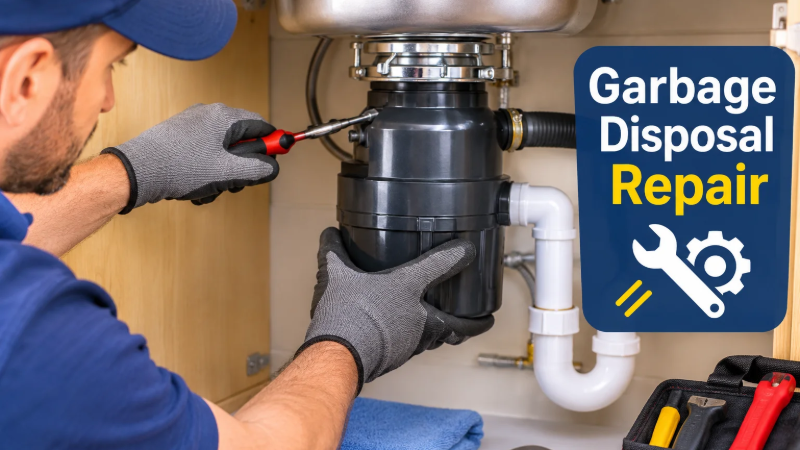
Garbage disposal repair helps homeowners keep their kitchen appliances working efficiently and prevent common plumbing problems. A garbage disposal makes kitchen cleanup easier by grinding suitable food scraps and moving them through the drainage system. It sits beneath the kitchen sink and works with the household plumbing to manage everyday food waste.
Like other kitchen appliances, a disposal can develop mechanical, electrical, and drainage problems. A humming motor, unusual grinding sounds, water leaks, or a blocked sink can indicate a problem that needs attention. Understanding garbage disposal repair helps homeowners identify common faults, protect their kitchen plumbing, and decide when professional service makes sense. This guide covers the main causes, practical troubleshooting methods, repair costs, and maintenance tips.
How a Garbage Disposal Works
A garbage disposal uses an electric motor to rotate a grinding plate. Small impellers push food particles against a stationary grinding ring, breaking suitable waste into smaller pieces. Running water carries the processed particles through the discharge pipe and into the household drainage system. The appliance depends on several components working together.
- Electric Motor: Powers the grinding mechanism and controls normal operation.
- Grinding Plate: Rotates inside the chamber to move food particles.
- Impellers: Push food waste against the grinding ring.
- Reset Button: Protects the motor from excessive heat and mechanical overload.
- Discharge Pipe: Transfers processed food waste into the drain system.
A fault in any of these components can affect the appliance’s performance.
Common Garbage Disposal Problems
Recognizing early warning signs can help homeowners prevent additional damage.
1. Disposal Makes a Humming Sound
A humming motor usually receives electricity but cannot rotate. Food particles, utensils, or foreign objects may block the grinding mechanism. Turn off the appliance immediately. Disconnect its power before inspecting the chamber. Never place your hands inside the disposal.
2. Garbage Disposal Will Not Turn On
An appliance that remains silent may have an electrical problem. A tripped breaker, disconnected plug, faulty switch, or activated overload protector can interrupt operation. Check the power connection and reset button according to the manufacturer’s instructions. Contact an electrician if the breaker repeatedly trips.
3. Water Leaks Beneath the Sink
Leaks can develop around the sink flange, discharge pipe, dishwasher connection, or disposal housing.
- Top Leakage: A worn gasket or loose mounting assembly may allow water to escape.
- Side Leakage: A damaged discharge connection or dishwasher hose may cause dripping.
- Bottom Leakage: Internal housing damage can indicate that the appliance needs replacement.
4. Disposal Produces Unusual Noises
Metallic rattling, clicking, and excessive vibration can indicate trapped objects or loose mounting components. Switch off the appliance and arrange an inspection if the noise continues.
How to Troubleshoot a Garbage Disposal
Safe troubleshooting can resolve certain minor problems. Always disconnect electrical power before inspecting the grinding chamber.
Check the Reset Button
Many disposals have a red overload reset button beneath the motor housing. Allow the appliance to cool before pressing the button. Restore power only after checking for visible obstructions and following the manufacturer’s instructions.
Remove a Mechanical Jam
Some models include a special wrench or Allen wrench for releasing a jammed grinding plate.
- Disconnect the electrical supply.
- Locate the manufacturer’s designated wrench socket.
- Follow the model-specific instructions to release the obstruction.
- Inspect the chamber with a flashlight.
- Remove accessible foreign objects with long-handled tongs.
Never insert your fingers into the grinding chamber. Stop if the mechanism remains stuck. InSinkErator provides model-specific instructions for clearing jams and resetting its disposals.
Check Drainage Problems
A disposal may operate normally while the connected drainpipe remains blocked. Food particles, grease, and accumulated debris can restrict water movement. A plumber can inspect the discharge pipe and determine whether the blockage comes from the appliance or the household drainage system.
When to Hire a Professional Repair Technician
Some problems require specialized tools and technical experience. Electrical faults, damaged motors, internal leaks, and repeated mechanical failures should receive professional attention. A qualified technician can inspect the motor, grinding assembly, electrical connections, mounting hardware, and drainpipe.
Professional service is especially important when:
- The disposal repeatedly stops during operation.
- Water leaks directly from the appliance housing.
- The electrical breaker trips repeatedly.
- Grinding noises continue after removing visible obstructions.
- The motor produces a burning smell or shows signs of damage.
A proper diagnosis helps prevent unnecessary replacement costs.
Garbage Disposal Repair Costs
The cost of garbage disposal repair depends on the damaged component, labor requirements, appliance model, and local service rates. Minor jams and loose connections usually require less work than motor replacement or complicated plumbing repairs.
Important pricing factors include:
- Replacement Parts: Gaskets, switches, mounting hardware, and motor components have different prices.
- Labor Charges: Technicians may charge additional fees for installation and complicated repairs.
- Appliance Condition: Older units may require more extensive servicing.
- Installation Work: Replacement can involve plumbing adjustments and electrical connections.
Request a written estimate before approving expensive work. Compare repair expenses with the price of a compatible replacement unit.
Repair or Replace Your Garbage Disposal?
The right decision depends on the appliance’s age, condition, and repair history. A minor obstruction or replaceable gasket may justify professional servicing.
A cracked housing, major motor failure, or repeated leaks can make replacement more practical.
Consider these factors:
- Age: Older appliances may have significant internal wear.
- Repair History: Frequent breakdowns can indicate declining performance.
- Replacement Price: Compare the full repair estimate with a new unit’s installation cost.
- Warranty: Check whether the manufacturer covers the damaged component.
- Kitchen Requirements: Select a replacement that matches your sink and plumbing connections.
A professional inspection can help determine which option offers better long-term value.
Maintenance Tips for Better Performance
Regular maintenance protects the grinding mechanism and helps prevent drainage problems.
- Run Cold Water: Use cold water during grinding and briefly afterward to flush food particles.
- Avoid Grease: Keep cooking oil and fats out of the disposal and drainpipe.
- Control Food Waste: Feed suitable scraps in small quantities.
- Remove Fibrous Materials: Avoid large amounts of celery strings, corn husks, and similar waste.
- Clean the Splash Guard: Remove accumulated food particles according to manufacturer instructions.
- Inspect Connections: Check beneath the sink for leaks and loose fittings.
InSinkErator recommends cold water during grinding and warns against putting grease into the disposal.
Final Thoughts
A properly maintained garbage disposal supports kitchen cleanliness and efficient food waste management. Humming motors, unusual noises, water leaks, and drainage problems can indicate mechanical or plumbing faults. Effective garbage disposal repair starts with identifying the actual cause instead of replacing components unnecessarily. Homeowners can handle certain minor checks safely, while electrical faults and internal damage require professional service. Regular maintenance, correct usage, and timely inspections can help protect the appliance and reduce avoidable repair expenses. If you need more details to visit my blogs.
Frequently Asked Questions
Q1. What causes a garbage disposal to stop working?
Mechanical jams, electrical interruptions, damaged motors, and activated overload protectors are common causes.
Q2. Can I fix a jammed garbage disposal myself?
Some models allow homeowners to release jams using a manufacturer-approved wrench. Always disconnect power and follow the appliance instructions.
Q3. Why does my disposal leak water?
Damaged gaskets, loose discharge connections, and cracked housings can cause water leakage.
Q4. How much does garbage disposal repair cost?
Costs depend on the damaged component, labor, appliance model, and local service rates. Request a professional estimate.
Q5. When should I replace my garbage disposal?
Consider replacement when the housing cracks, the motor fails, or repeated repairs become more expensive than installing a new unit.
Q6. How can I prevent disposal problems?
Run cold water during grinding, avoid grease and fibrous waste, and clean the appliance according to manufacturer instructions.